
Efflux pump inhibitors
Pathogenic Enterobacteriaceae
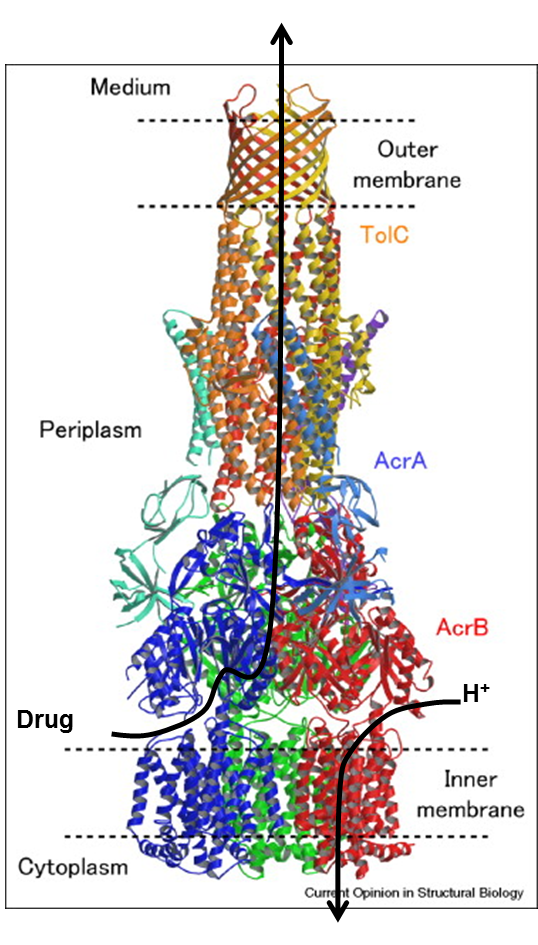
Potent activity vs RND efflux pumps
Lead Optimization
The rise of multidrug resistant (MDR) Gram-negative pathogens complicates our
ability to treat bacterial infections with antibiotics. MDR efflux pumps play a
major role in the acquisition and expression of the MDR phenotype. The major MDR
efflux pumps in the Gram-negative pathogens are the resistance-nodulation-division
(RND) superfamily pumps. Efflux pump inhibitors (EPIs) that target RND superfamily
pumps could play an important role in the clinic as adjunctive therapy to increase
antibiotic efficacy, decrease resistance and attenuate virulence in Gram-negative pathogens.
- The RND family efflux pumps increase intrinsic resistance of Gram-negative
pathogens to antibacterial agents. - Overexpression of RND type efflux pumps leads to MDR.
- Efflux pump inhibitors (EPIs) that target RND efflux pumps increase the
antibiotic susceptibility of MDR pathogens. - RND pumps are present in all Gram-negative pathogens.
- We are developing efflux pump inhibitors for use as a combination therapy
with an FDA-approved antibiotic that will:
-Increase antibacterial potency at low concentrations
-Decrease frequency of resistance mutations.

We are optimizing a series of novel pyranopyridine EPIs that target RND-type efflux pumps
that exhibit potent activity against pathogens of the Enterobacteriaceae, favorable in vivo
pharmacokinetics, and efficacy in an in vivo infection model.
- Carbapenem-resistant Enterobacteriaceae (CRE) is classified as an Urgent Threat Level pathogen by the CDC and as a Critical Priority Pathogen by the WHO.
- CRE have become resistant to all or nearly all of today’s antibiotics.
- Almost 50% of hospital patients that get CRE bloodstream infections die from the infection.